/logo.webp)
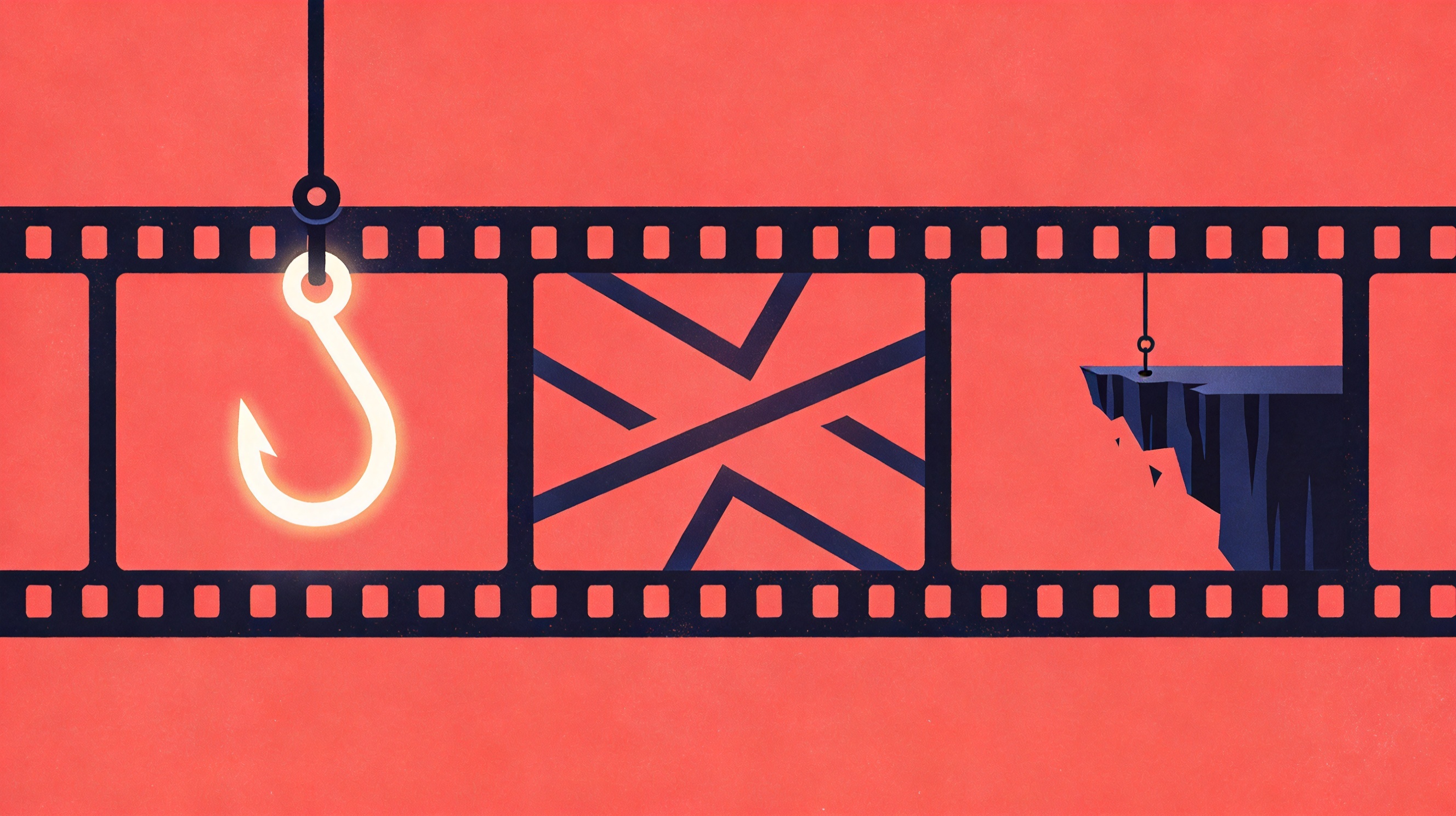
The 60-Second Hook Formula for Short Drama Episodes

The viewer is already moving their thumb. You have the time it takes to read a street sign. If the first image does not ask a question, they are gone before the logo. If the last image does not make not unlocking feel worse than paying, the episode was a trailer for nothing.
That is not a taste argument. It is the format. China’s National Radio and Television Administration added “online micro-drama” as an official category in December 2020, defining the form by episode length under ten minutes. The hidden definition is denser: vertical, and a hook in every episode. Traditional drama is built in scenes. Microdrama is built in the seconds before a swipe.
Most “how to write a short drama” posts hand you a three-act movie and shrink the page count. This one is a per-episode machine: hook, conflict, cliffhanger, in about 60 seconds, without spending the season’s only twist on episode four.
Table of Contents
- The real unit is hook density, not runtime
- The 60-second beat sheet
- Five hook types that survive a mute autoplay
- Cliffhangers that ask, not spoil
- A checklist you can run on every episode
- Frequently asked questions
The real unit is hook density, not runtime
A microdrama episode is “short” on paper and expensive on attention. TheWrap’s industry explainer describes the standard package as 60 to 100 minutes of total runtime cut into roughly 90-second episodes, with the first 8–10 free and the rest behind unlocks or a subscription. Viewers do not pay because the lighting was good. They pay because a cliffhanger made not paying feel worse.
That is why the evaluation question for an AI short drama is not “does this look live-action.” It is “does this reverse the situation by second eight, and again at the cut.” If you want the full pipeline around the script, start with how to make a short drama and short drama script structure. This page is only the 60-second engine those guides assume you already have.

Illustration drawn for the production workflow — reused from the existing DramaSo image set.
If you cannot point to the second where the question appears, you do not have a hook. You have an establishing shot.
Practical rule: Time the first question with a phone stopwatch, not with your outline. If it lands after three seconds of walking, recut.
The 60-second beat sheet
Write this on a card. One episode, one card. If a beat is not on the card, it does not get a shot.
- 0–3s — Image that asks. A door half open. A pregnancy test. A boss holding a ring that is not for the person in the room. Mute-safe: the question must read as a picture.
- 3–12s — Who wants what, badly. One line of want. Not backstory. “I need this contract tonight” is a want. “She had a difficult childhood” is a pamphlet.
- 12–35s — Pressure that cannot be paused. A timer, a witness, a public humiliation, a body in the next room. Conflict is not arguing. Conflict is a clock.
- 35–50s — A choice with a cost. Two options, both expensive. If the lead can walk away clean, the episode is a mood piece.
- 50–60s — The unpaid question. The cliffhanger is a new question, not the answer to the old one. “Is he the killer?” can wait. “She just signed — and the name on the deed is his” cannot.
A full season still needs a bible. The AI script generator turns one idea into a beat-timed script; the hook generator gives you three opening mechanisms for the same premise so you are not married to the first gag. Neither replaces the card. The card is how you stop the generator from writing a two-minute walk to a kitchen.
Work backwards from an ending that pops — the same discipline, compressed into one vertical minute.
Practical rule: If the cliffhanger could be swapped onto another episode without rewriting the middle, it is decoration. Write a new last five seconds.
Five hook types that survive a mute autoplay
Feeds start muted. Dialogue-first hooks die. These five still work when the sound is off. Steal the mechanism, not the plot.
| Type | Picture in the first 3s | Best for | Fail mode |
|---|---|---|---|
| Object-out-of-place | A wedding dress in a boardroom | Romance / revenge | The object is pretty but unexplained |
| Status drop | A nameplate being unscrewed | Workplace / heir | You explain the job for 20s first |
| Body in the frame | Someone hiding in the same shot as the speaker | Thriller | The hide is visible only after a zoom |
| Public clock | A countdown on a phone the whole room can see | Contract / custody | The clock is mentioned, not shown |
| Wrong witness | A child / parent / rival hears the line | Family / betrayal | The witness is introduced in a title card |
I’d cut any opening that needs a caption to be interesting. Captions help retention later. They do not create the question.
The same five types are what the free hook generator is built to spit out as script-ready lines. Use it when you are stuck. Then put the winning line on the card and storyboard the picture, not the sentence. For turning that picture into shots, see how to storyboard a short film.
Cliffhangers that ask, not spoil
A bad cliffhanger answers the episode. A good one makes the next episode the only place the answer can live.
Burned twist (do not do this): Episode 4 reveals the husband is the killer, then episodes 5–40 are fallout. You spent the season.
Open tab (do this): Episode 4 reveals the husband signed the papers — and the camera holds on a second signature the lead cannot see. The audience has a question the character does not. That is the unlock.
Three tests before you lock the last shot:
- Information gap. Someone on screen knows less than the viewer, or the reverse. Equal knowledge is a fade-out, not a cliffhanger.
- Irreversible move. A signature, a send, a door locked from the outside. If they can undo it off-screen, they will, and the viewer will not pay to watch them undo it.
- Next-episode first image is already implied. If you cannot describe episode N+1’s opening picture, you wrote a stop, not a hinge.
Seams matter here too. The right unit for a long take is not seconds — it is how many story-joins you force per minute. Put the cleanest, longest shot on the cliffhanger. A face hold beats a whip-pan into a title card.
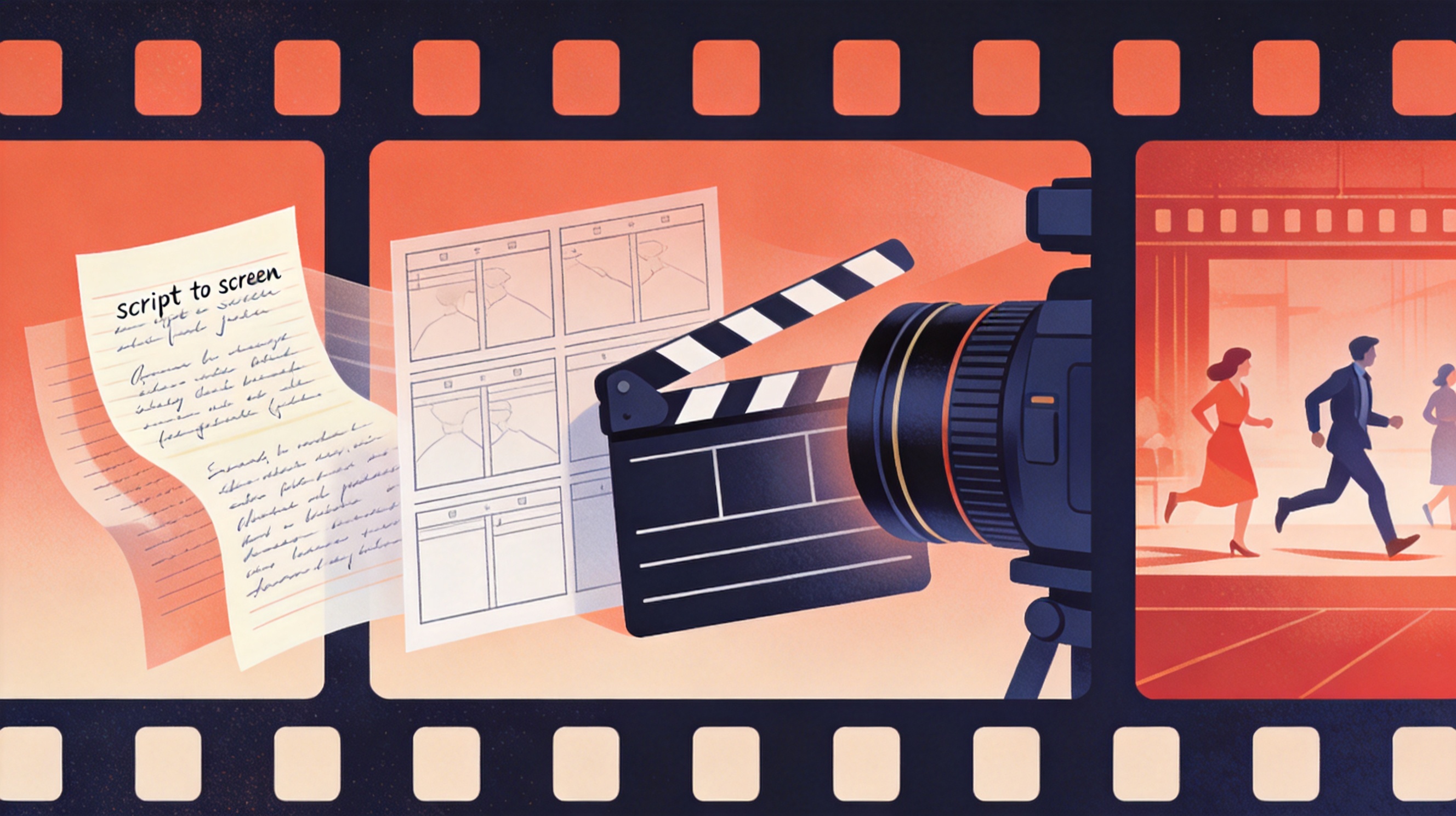
The last five seconds are a product decision: they are the paywall.
Decision filter: Would a stranger who missed episodes 1–N still feel a new question at the cut? If not, you wrote a recap.
A checklist you can run on every episode
Print this. Run it on the cut, not on the outline.
- Mute the episode. Does a question appear as a picture in the first three seconds?
- Can you say the want in one clause without a childhood?
- Is there a clock — literal or social — that cannot pause?
- Does the lead make a choice that costs something visible?
- Is the last shot a new question, not the answer to the first one?
- Could this cliffhanger be swapped onto another episode? If yes, rewrite the last five seconds.
- Does the next episode’s first image already exist in your head?
If you fail 1 or 5, do not generate the rest of the season. Fix the card. Then generate coverage around it with the AI episode generator so episode order stays the spine, not an afterthought.
| Beat | Time | Passes if… |
|---|---|---|
| Hook | 0–3s | Mute-safe picture asks a question |
| Want | 3–12s | One clause, present tense |
| Pressure | 12–35s | A clock the lead cannot pause |
| Choice | 35–50s | Both options are expensive |
| Cliffhanger | 50–60s | New question, irreversible move |
Frequently asked questions
How long should a short drama episode hook be?
Three seconds of picture, not ten seconds of talking. The whole episode can run 60–90 seconds. The hook is the question that appears before the thumb moves.
What is the difference between a hook and a cliffhanger?
The hook opens a question the episode will pressure. The cliffhanger opens a different question the next episode has to hold. Using the same question twice is a loop, not a season.
Can AI write the hook for me?
It can draft three mechanisms. It cannot tell you which picture will read on mute, and it will happily burn the season’s only twist on episode four. Generate options, then run the checklist on a human pass.
Do I need a three-act structure inside 60 seconds?
You need want, pressure, choice, unpaid question. If calling that “three acts” helps you, fine. If it makes you write a 20-second setup, throw the acts out and keep the card.
The bottom line: Runtime is the official definition. Hook density is the one that gets you paid. Write the card, shoot the question, hold the last face. Generate the opening hooks, then lock the season.
Popular guides
More in this series
- Wan 3.0 public beta: 30-second one-takes, and how short-drama workflows should actually use them
- Kling 3.0 Omni for Short Drama: Lip-Sync and Multi-Shot Storyboarding, Step by Step
- Seedance 2.0 for Short Drama Storyboarding: A Field Method
- How to Make a Short Drama: Script to Screen
- How to Storyboard a Short Film