/logo.webp)

Character.AI Enters the Microdrama Race: How Chattable Characters Change Interactive Short Drama

On 9 July 2026, Character.AI launched (c.ai) series — original vertical microdramas made by an in-house studio, with one twist that no streaming rival has: after you watch an episode, you can open a chat and keep talking to the characters. As reported by TechCrunch, this is a chatbot company walking into short drama through a door the video platforms left unlocked: interactivity.
This is a signal worth reading closely if you make short drama. Not because a chat app will out-produce studios overnight, but because it reframes what a “series” can be — and where the next format edge might sit. Here is what launched, what it means, and how a creator should respond.
What Character.AI actually launched
The official announcement describes (c.ai) series as short-form, vertical shows built around original characters, designed for mobile, and wired into Character.ai’s core chat experience. The loop is: watch a series, meet the characters, then continue the story by chatting with them directly.
Three titles opened the slate, each staking a genre:
- “Last Summer” — a romance anime
- “The Nighttime Game” — a Gen Z paranormal horror story
- “Eden Fall” — an enemies-to-lovers, game-world survival story
Character.AI has also signaled a broader push: serialized audio drama via c.ai FM and interactive fiction through c.ai Reads, pointing at a “connected entertainment” world where you watch, chat, listen and read inside one story universe (Blockchain.News coverage).
Practical rule: When a new entrant leads with a format twist rather than higher production values, the twist is the story. Character.AI is not competing on cinematics — it is competing on what you can do after the credits roll.
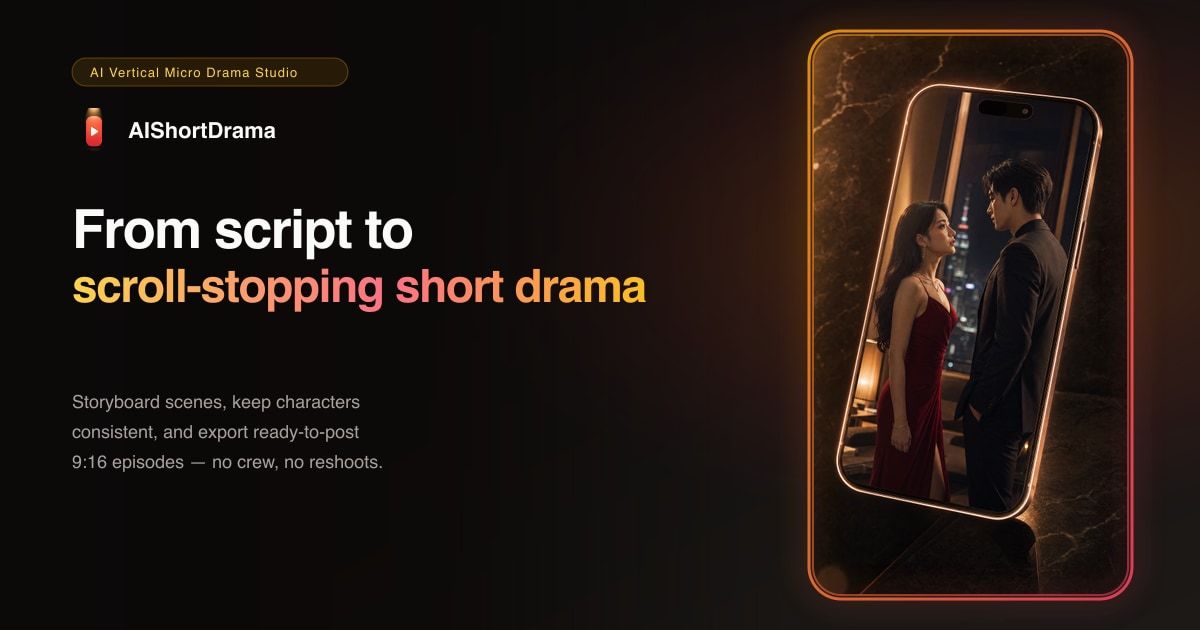
Illustration: DramaSo — the interactive loop where a finished episode opens into a conversation.
Why the interactive twist matters
Short drama’s business model is a paywall on episode 3 onward — attention converted to in-app purchases. Character.AI’s twist attacks the same problem from a different angle: instead of paying to see what happens next, you stay because you can talk to the character you just watched. Retention stops being purely “next episode” and becomes “keep living in this world.”
That is a genuinely new lever. It also has real limits worth naming honestly:
- Passive viewing is still the mainstream habit. Most short-drama audiences want to lean back and binge, not lean in and type. Interactivity is an addition, not a replacement.
- Production scale is unproven. A studio slate of three titles is a launch, not a catalogue. The platforms winning short drama ship hundreds of series.
- Chat quality has to match the character. If the on-screen character and the chat persona feel like different entities, the magic breaks.
Practical rule: Treat interactivity as a retention feature layered on top of a good story, not a substitute for one. A character no one wants to watch is a character no one wants to chat with either.
What it means for short-drama creators
For an independent creator, the takeaway is not “add a chatbot.” It is that character is becoming the durable asset — more than any single episode. If audiences will follow a character across watch, chat, listen and read, then the creator who builds memorable, consistent characters owns something a one-off viral clip never captures.
That raises the bar on exactly the thing solo AI creators most often get wrong: consistency. A character that looks, sounds and behaves the same across every episode is the precondition for any world an audience wants to stay inside. If your protagonist drifts between episodes, there is no “world” to be interactive about.
This is where a production layer earns its place. DramaSo is built so the character is a locked asset, not a per-episode gamble: define face, wardrobe and voice once with the AI short drama generator, keep them consistent across a whole season via the AI episode generator, and shape each character’s arc with the AI script generator. Whatever formats come next — chat, audio, interactive — they all depend on a character worth returning to.

Screenshot: DramaSo — one locked cast across an entire season, the asset interactivity is built on.
Where this goes next
Three predictions, stated plainly so you can hold us to them.
- By mid-2027, at least one major short-drama platform copies the chat-with-characters loop. The retention math is too good to ignore once Character.AI shows early numbers.
- Interactivity stays a premium add-on, not the default. Passive binging remains the volume format; chat becomes the upsell for the fans who convert hardest.
- Character consistency tooling becomes table stakes. As characters outlive episodes, the studios that treat a character as a locked, reusable asset win the creator market. If we’re wrong and interactivity becomes the default within a year, we’ll say so.
Practical rule: Build for the format you can ship today, not the one in the headlines. Interactivity is a bet on the future; a consistent, memorable cast is the asset that pays off no matter which format wins.
For creators, none of this changes today’s job: write a hook, cast a character worth obsessing over, and ship. Read how to make an AI short drama for TikTok to start, or the comparison of AI video models for short drama to pick your generation stack.
FAQ
What is Character.AI’s (c.ai) series?
Launched on 9 July 2026, (c.ai) series is a slate of original vertical microdramas made by Character.AI’s in-house studio. The distinguishing feature is interactivity: after watching an episode, you can chat directly with the characters inside the Character.ai app. The first three titles are “Last Summer,” “The Nighttime Game” and “Eden Fall.”
How is this different from ReelShort or DramaBox?
Traditional short-drama platforms are passive: you watch episodes and pay to unlock more. Character.AI adds a conversational layer — you can talk to the characters after the episode ends — turning a series into an interactive world rather than a linear watch.
Does interactive microdrama replace normal short drama?
No. Passive binge-watching remains the mainstream habit and the volume business. Chat interactivity is a retention and monetization add-on for the most engaged fans, not a replacement for well-made linear episodes.
What should short-drama creators learn from this?
That character is becoming the durable asset. If audiences follow a character across watching, chatting, listening and reading, then consistent, memorable characters matter more than any single viral episode — which raises the bar on cross-episode character consistency.
How do I build characters strong enough for an interactive world?
Lock each character once — face, wardrobe, voice — and carry them consistently across every episode. Start free with DramaSo to plan a season with a locked cast, so your characters stay the same show from episode 1 to episode 40.
Verdict: Character.AI’s move into microdrama is less about better video and more about a new format edge — watch, then talk to the character you just watched. The lasting lesson for creators is that character, not the clip, is the asset that survives every new format. Build one worth returning to: write a hook and let DramaSo plan, cast and caption your first season free.
Popular guides
More in this series
- Cite 37 Short Drama Statistics (2026): Market Size, Growth & Apps
- What Is an AI Short Drama? (And Is the Drama You're Watching AI-Generated?)
- When AI Took the Set: Live-Action Microdrama Jobs vs the New Pipeline
- Korean and Chinese Short Drama Recommendations: A 2026 Viewer's Guide
- AI Short Drama Goes Global: The 2026 Overseas Boom, Big Players, and Creator Payouts
View all 10 articles in Short Drama Industry & Market →